Engineered Quartz
Manufactured, non-porous, low maintenance.
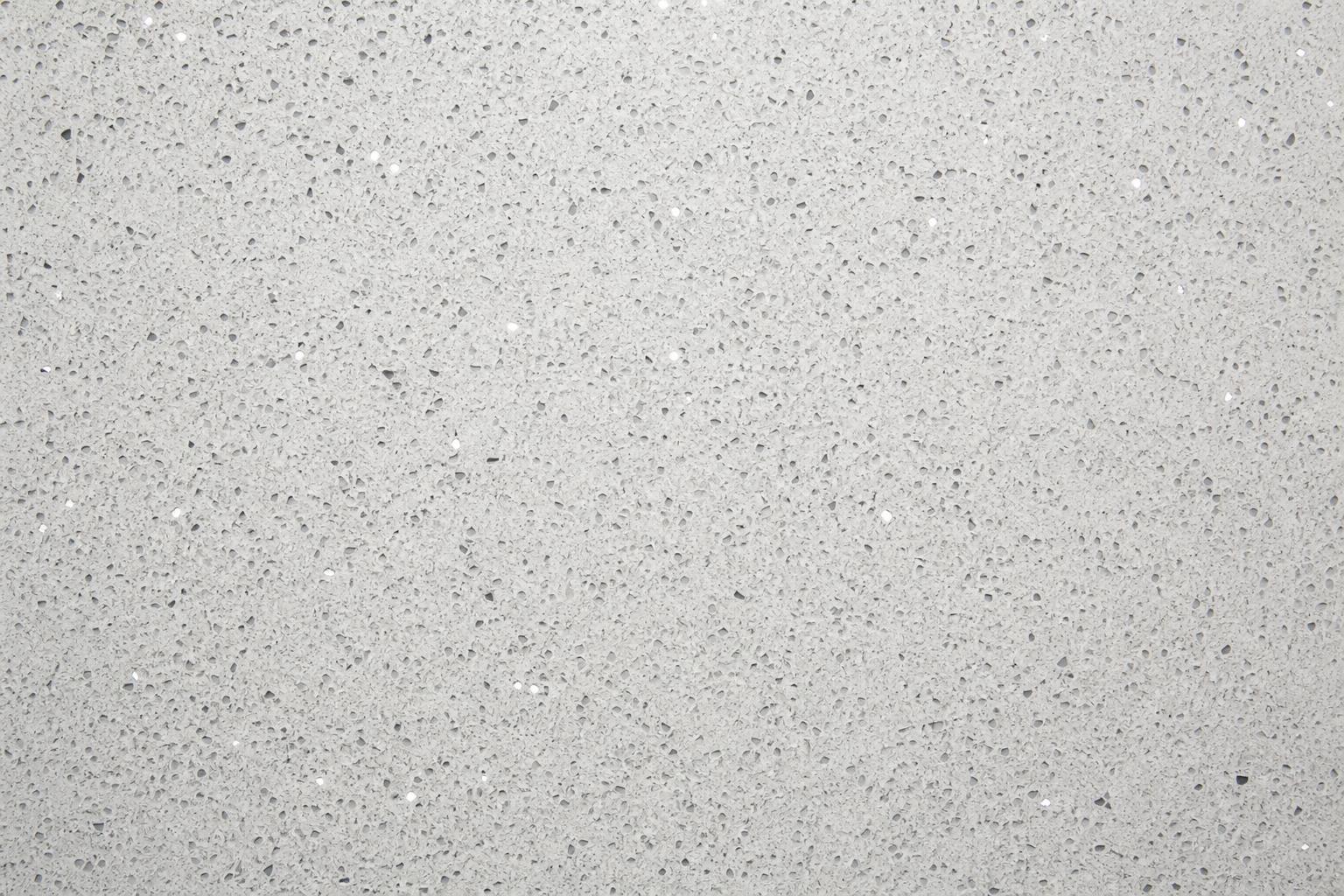
Engineered quartz is roughly 90% ground stone bound with polymer resin. It is non-porous, never needs sealing, and offers consistent patterns — but cannot tolerate high heat or strong solvents.
Telltale traits
- uniform pattern
- no natural veining variation
- non-porous
Best for
- • Kitchen counters
- • Bathroom vanities
- • Commercial surfaces
Avoid for
- • Outdoor use
- • Hot pots placed directly on the surface
Cleaning routine
Daily
Mild soap and warm water; soft cloth.
Weekly
Quartz-safe surface cleaner.
Deep clean
Use a non-abrasive cleaner like Bar Keepers Friend (sparingly) for stubborn marks.
Sealing
Not required
Engineered quartz is non-porous and does not require sealing.
What to avoid
High heatBleachSolvents (paint thinner, acetone)Abrasive scrub pads
When to call a pro
Pro for chips, cracks, or burn marks — these usually require slab repair.
Safe products & ingredients
Stone family: Resin-bound (heat- and solvent-sensitive)
Use these products
- • Mild dish soap and warm water
- • Manufacturer-approved cleaner (e.g. Caesarstone Cleaner, Cambria Counter Cleaner)
- • Isopropyl alcohol (50/50) for occasional disinfecting
- • Soft microfiber or non-scratch nylon pad
Look for these ingredients
- • Neutral pH surfactants
- • Isopropyl alcohol up to 50%
- • Mild glass-cleaner formulations without ammonia
Never use on this stone
Avoid these products
- • Bleach, oven cleaners, paint strippers, drain cleaners
- • Solvents: acetone, mineral spirits, methylene chloride, dichloromethane
- • Abrasive scouring powders, Magic Eraser, steel wool
- • High-alkaline degreasers (pH > 10) such as Easy-Off
- • Hot pots placed directly on the surface
Scan labels for these ingredients
- Sodium hydroxide (lye)
- Methylene chloride
- Acetone and other ketone solvents
- Sodium hypochlorite (bleach) in concentrated form
- Hydrofluoric acid
Do's and don'ts at a glance
Do
- Clean daily with soap and water or an approved cleaner
- Use trivets — resin softens above ~150°F (65°C)
- Wipe spills promptly so dyes don't sit on the surface
Don't
- Don't seal — it's already non-porous
- Don't use solvent-based strippers or paint thinners
- Don't place hot cookware directly on the slab
- Don't install outdoors — UV will discolor the resin
Frequently asked questions
Do I need to seal engineered quartz?
Never — it is non-porous.
Can I use it outside?
No. UV discolors most engineered quartz. Use natural stone outdoors.