Marble
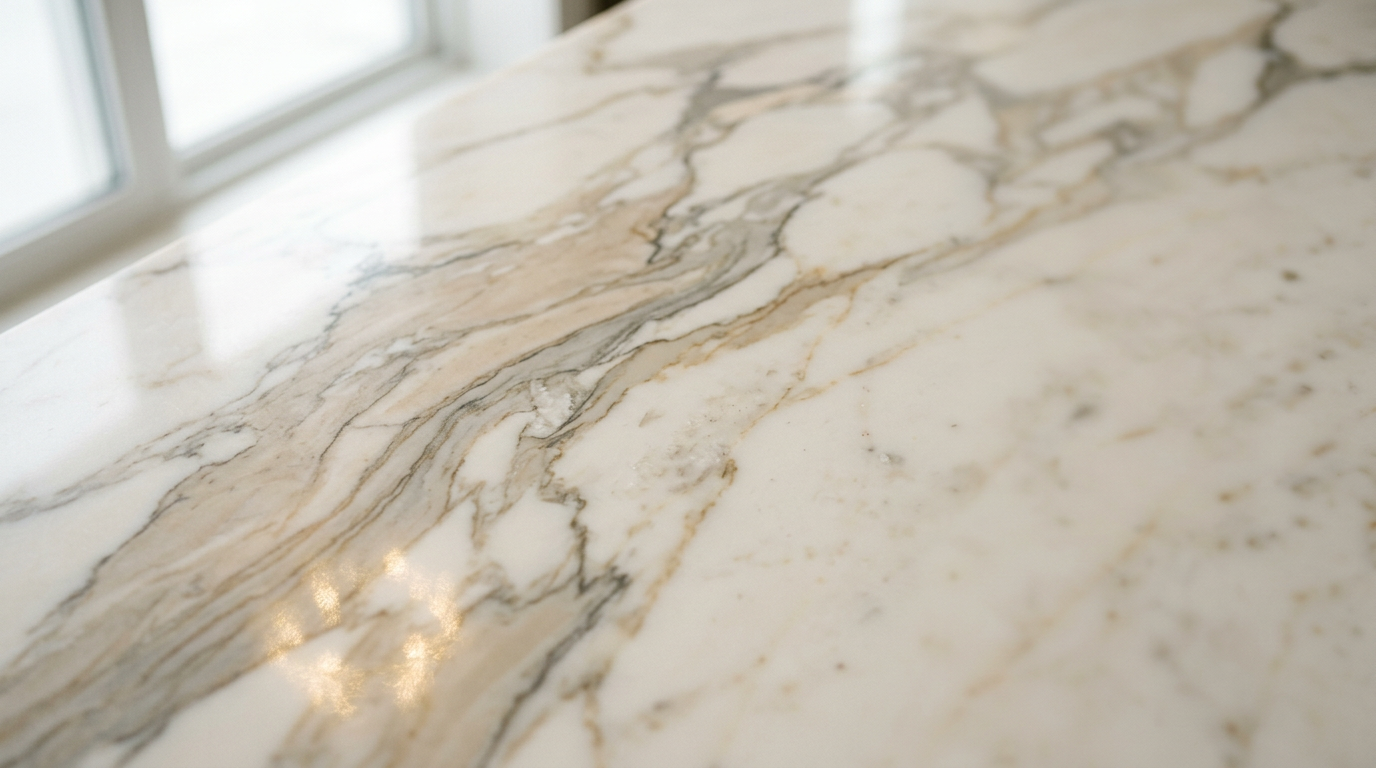
Timeless veining, soft and reactive.
Marble is a metamorphic stone prized for its luminous depth and flowing veining. It is calcium-based, which makes it beautiful but reactive — acids etch it and oils stain it if left unsealed.
Telltale traits
- soft veining
- cool tones
- polished sheen
Best for
- • Bathroom vanities
- • Fireplace surrounds
- • Low-traffic floors
- • Pastry stations
Avoid for
- • Heavy-use kitchen counters
- • Outdoor patios in freeze-thaw climates
Cleaning routine
Daily
Wipe with a soft cloth and warm water, or pH-neutral stone cleaner.
Weekly
Clean with a dedicated marble-safe cleaner; dry with a microfiber cloth to avoid water marks.
Deep clean
Apply a stone-safe poultice for stains; re-polish dull areas with marble polishing powder.
Sealing
Yes — Every 6–12 months
Use a penetrating impregnating sealer designed for marble.
What to avoid
When to call a pro
Call a stone restoration pro for deep etches, large stains, or to refinish a polished surface.
Safe products & ingredients
Stone family: Calcium-based (acid-sensitive)
Use these products
- • pH-neutral stone cleaner (e.g. MB Stone Care MB-5, Granite Gold Daily Cleaner, Method Daily Granite)
- • Microfiber cloth + warm distilled water for daily wipe-downs
- • Impregnating penetrating sealer (e.g. Miracle 511, Aqua Mix Sealer's Choice Gold) every 6–12 months
- • Marble polishing powder for light etches
Look for these ingredients
- • Neutral pH 7–8 surfactants
- • Distilled or filtered water
- • Food-grade mineral oil (only on honed soap residue test patches)
- • Calcium carbonate / cerium oxide polishing compounds
Never use on this stone
Avoid these products
- • Vinegar, lemon juice, or any citrus cleaner
- • Bleach, ammonia, or all-purpose sprays (Windex, Lysol, 409, Mr. Clean)
- • Tub & tile or grout cleaners (CLR, Lime-A-Way, Soft Scrub)
- • Bar Keepers Friend, Magic Eraser, or any abrasive pad
- • DIY baking-soda + vinegar pastes
Scan labels for these ingredients
- Acetic acid (vinegar)
- Citric acid
- Hydrochloric / muriatic acid
- Phosphoric acid
- Sodium hypochlorite (bleach)
- Ammonium hydroxide (ammonia)
- Oxalic acid
Do's and don'ts at a glance
Do
- Blot — never wipe — spills immediately, especially wine, coffee, oil, and citrus
- Use coasters, trivets, and cutting boards on counters
- Dust mop floors before damp mopping with a neutral cleaner
- Reseal on a 6–12 month cadence; test with a water bead
Don't
- Don't let acidic foods sit — even a lemon slice etches in minutes
- Don't scrub with green pads, steel wool, or scouring powder
- Don't use 'natural' or 'green' cleaners without checking the pH
- Don't apply waxes or topical sealers that build a film
Frequently asked questions
Does marble stain easily?
Yes — oils, wine, and dyes can stain unsealed marble. Reseal every 6–12 months and blot spills immediately.
Why does my marble have dull spots?
Those are etches caused by acidic substances (lemon, vinegar, some cleaners) reacting with the calcium carbonate. They can be polished out.
Can I use marble in a kitchen?
Yes, but expect a lived-in patina. Choose honed marble, seal regularly, and accept some etching as character.