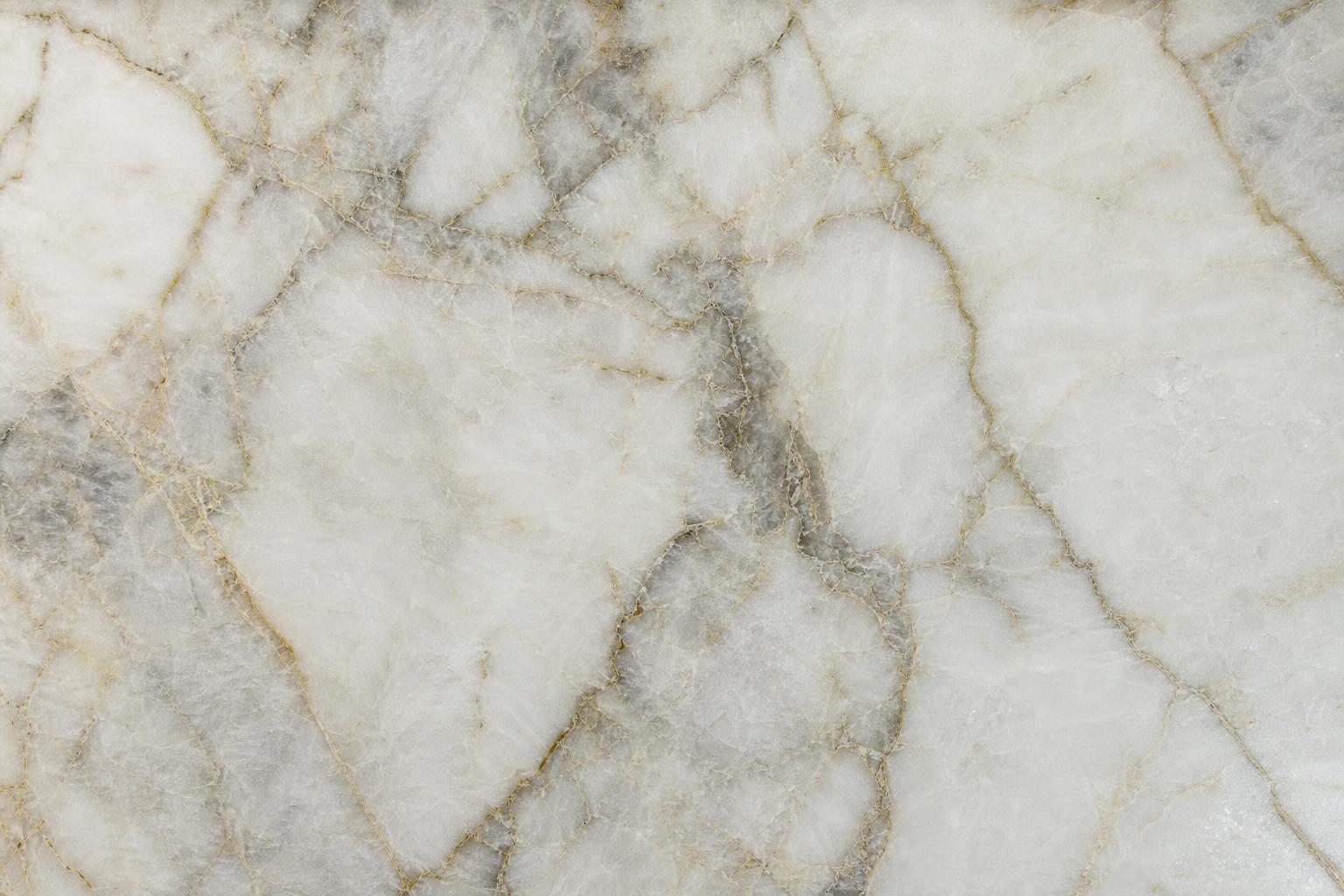
Quartzite
Marble's look, granite's toughness.
True quartzite is a metamorphic sandstone — extremely hard, glassy, and resistant to etching. It often gets confused with marble or with engineered quartz, so verification matters before buying.
Telltale traits
- glassy crystalline veining
- cool to the touch
- very hard surface
Best for
- • Kitchen counters
- • Heavy-use surfaces
- • Backsplashes
Avoid for
- • Buyers expecting zero veining
Cleaning routine
Daily
pH-neutral stone cleaner or warm water with mild soap.
Weekly
Stone-specific cleaner and dry buff.
Deep clean
Poultice for stains; verify true quartzite vs marble before using polishing powders.
Sealing
Yes — Every 1–2 years
Most quartzites benefit from a penetrating sealer.
What to avoid
When to call a pro
Pro help recommended for chips, cracks, or doubt about whether the stone is true quartzite.
Safe products & ingredients
Stone family: Silica-based (acid-tolerant)
Use these products
- • pH-neutral stone cleaner (Granite Gold, MB-5, StoneTech Revitalizer)
- • Mild dish soap (a few drops in warm water) for occasional cleaning
- • Penetrating impregnator sealer every 1–3 years
- • Isopropyl alcohol (50/50 with water) for disinfecting counters
Look for these ingredients
- • Neutral pH surfactants
- • Isopropyl alcohol up to 50%
- • Hydrogen peroxide 3% (spot use for organic stains)
- • Fluoropolymer or silane/siloxane sealer chemistry
Never use on this stone
Avoid these products
- • Bleach and ammonia-based sprays used daily
- • Acidic bathroom cleaners (CLR, Lime-A-Way) on polished finishes
- • Wax or topical 'shine' sprays — they trap haze
- • Vinegar — it won't etch quartzite/granite quickly but degrades sealers
Scan labels for these ingredients
- Sodium hypochlorite (bleach) in repeated daily use
- Ammonium hydroxide (ammonia) in repeated daily use
- Hydrofluoric acid (in some rust removers) — destroys quartz
- Silicone polish additives — leave a residue under sealer
Do's and don'ts at a glance
Do
- Wipe daily with neutral cleaner or soap-and-water
- Disinfect occasionally with diluted isopropyl alcohol
- Test sealer yearly with a water bead
- Use a cutting board to protect knives, not the stone
Don't
- Don't rely on bleach or ammonia for daily cleaning — they strip sealer
- Don't put a hot pan on a sealed area repeatedly — heat shortens sealer life
- Don't use rust removers without checking they're hydrofluoric-acid free
- Don't ignore a faded water bead — that's the cue to reseal
Frequently asked questions
Quartzite vs quartz — what's the difference?
Quartzite is 100% natural stone. Engineered quartz is ground stone bound with resin. Quartzite tolerates heat; engineered quartz can scorch.
Does quartzite need sealing?
Most slabs benefit from a penetrating sealer every 1–2 years, though some dense varieties need almost none.
How do I confirm it's true quartzite?
Ask the supplier for a scratch test (a steel knife should not mark it) and an acid test (true quartzite won't etch from lemon juice).