
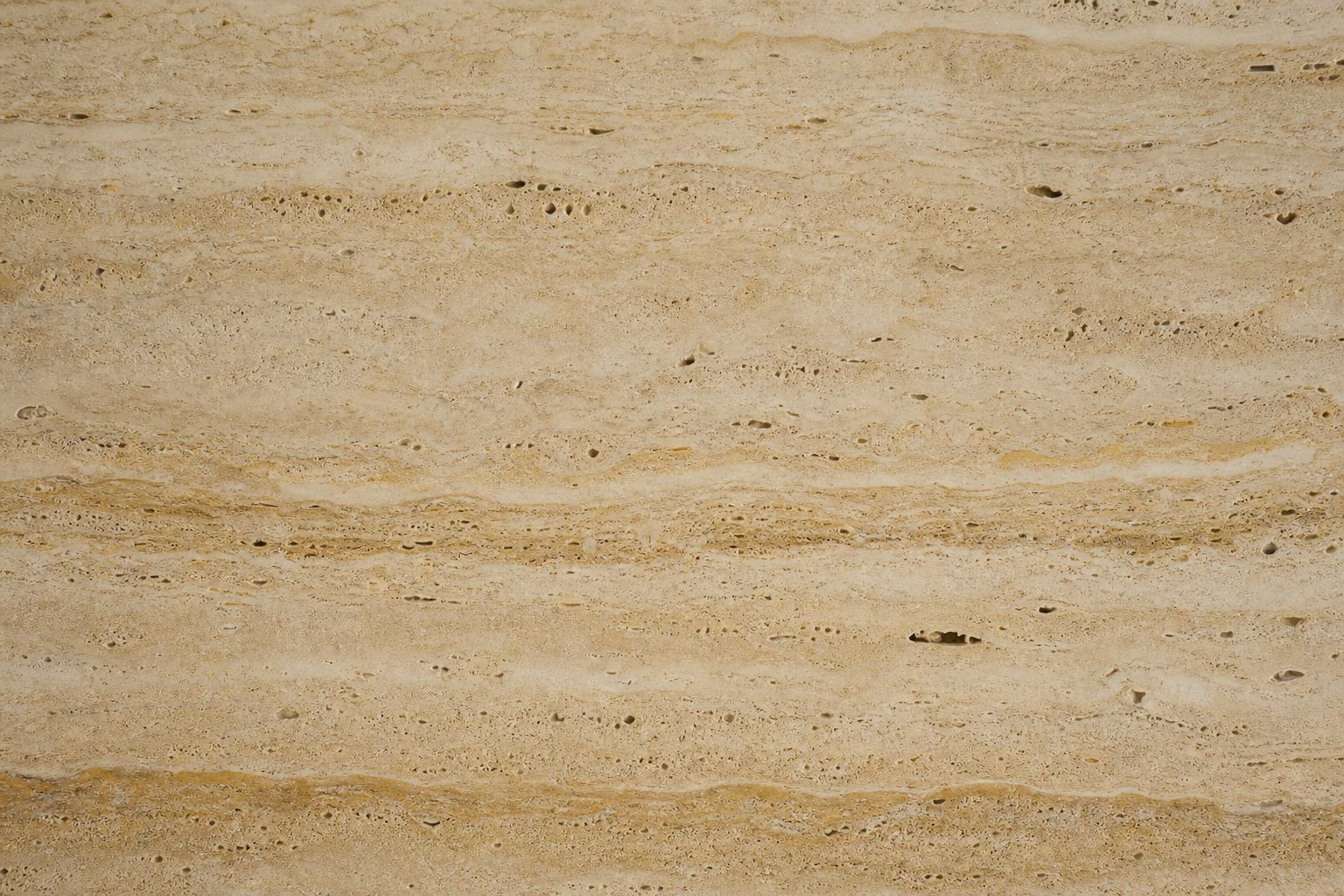
Travertine
Banded, porous, perfect for warm interiors.
Travertine forms in mineral hot springs and shows characteristic bands and pits. It is sold filled (smooth) or unfilled (rustic) and works equally well indoors and out.
Telltale traits
- porous surface with natural pits
- warm beige/tan tones
- banded texture
Best for
- • Pool decks
- • Patios
- • Bathroom floors and walls
- • Showers
Avoid for
- • Areas with heavy acidic spills
Cleaning routine
Daily
Dust mop or soft cloth, pH-neutral cleaner if needed.
Weekly
Stone-safe cleaner; rinse and dry.
Deep clean
Refill open pits with color-matched grout/filler if needed.
Sealing
Yes — Every 1–2 years
Use a penetrating sealer; consider a color-enhancing sealer for outdoor use.
What to avoid
VinegarLemonBleachAcidic tile cleaners
When to call a pro
Pro for re-honing, filling large pits, or restoring a polished finish.
Safe products & ingredients
Stone family: Calcium-based (acid-sensitive)
Use these products
- • pH-neutral stone cleaner (e.g. MB Stone Care MB-5, Granite Gold Daily Cleaner, Method Daily Granite)
- • Microfiber cloth + warm distilled water for daily wipe-downs
- • Impregnating penetrating sealer (e.g. Miracle 511, Aqua Mix Sealer's Choice Gold) every 6–12 months
- • Marble polishing powder for light etches
Look for these ingredients
- • Neutral pH 7–8 surfactants
- • Distilled or filtered water
- • Food-grade mineral oil (only on honed soap residue test patches)
- • Calcium carbonate / cerium oxide polishing compounds
Never use on this stone
Avoid these products
- • Vinegar, lemon juice, or any citrus cleaner
- • Bleach, ammonia, or all-purpose sprays (Windex, Lysol, 409, Mr. Clean)
- • Tub & tile or grout cleaners (CLR, Lime-A-Way, Soft Scrub)
- • Bar Keepers Friend, Magic Eraser, or any abrasive pad
- • DIY baking-soda + vinegar pastes
Scan labels for these ingredients
- Acetic acid (vinegar)
- Citric acid
- Hydrochloric / muriatic acid
- Phosphoric acid
- Sodium hypochlorite (bleach)
- Ammonium hydroxide (ammonia)
- Oxalic acid
Do's and don'ts at a glance
Do
- Blot — never wipe — spills immediately, especially wine, coffee, oil, and citrus
- Use coasters, trivets, and cutting boards on counters
- Dust mop floors before damp mopping with a neutral cleaner
- Reseal on a 6–12 month cadence; test with a water bead
Don't
- Don't let acidic foods sit — even a lemon slice etches in minutes
- Don't scrub with green pads, steel wool, or scouring powder
- Don't use 'natural' or 'green' cleaners without checking the pH
- Don't apply waxes or topical sealers that build a film
Frequently asked questions
Should I buy filled or unfilled travertine?
Filled is easier to clean and works for floors. Unfilled has more character and is fine for walls and outdoor use.
How do I clean dirt from travertine pits?
Use a soft brush and pH-neutral cleaner. Reseal afterward.
Popular Travertine varieties
Step-by-step guides
How to clean Travertine
Travertine's natural pits trap dirt and acid. The right cleaning method lifts grime without forcing it deeper into the stone.
How to seal Travertine
Filled and unfilled travertine seal differently. Here's how to handle the pits and the field, and how to know when it's time to reseal.
How to polish Travertine
Polishing travertine means filling pits first, then buffing the field. Skip the prep and you'll just highlight every hole.
How to remove oil stains from Travertine
Travertine's pits trap oil deep — a single poultice rarely works. Here's the layered method that gets it out for good.
How to remove wine stains from Travertine
Wine pools in travertine pits and stains both deep and wide. Treat the pit and the field separately — here's the technique.
How to remove rust stains from Travertine
Rust on travertine sits inside the natural cavities. The gentlest poultice and the longest dwell time — that's the only path.
How to remove water rings stains from Travertine
Water rings on travertine usually mean mineral deposit, not damage. Here's the safe descaling approach that won't strip the finish.
How to repair etch marks on Travertine
Etch marks on travertine often look like new pits. Polishing powder works on filled areas — here's how to tell when it's time to refill instead.
How to repair scratches on Travertine
Travertine scratches are usually deeper than they look. Fine compound buffs the surface but won't touch deep gouges — here's the threshold.
How to repair chips on Travertine
Travertine chips at the edges of natural pits constantly. Color-matched epoxy is the answer — here's how to keep it from looking like a patch.