
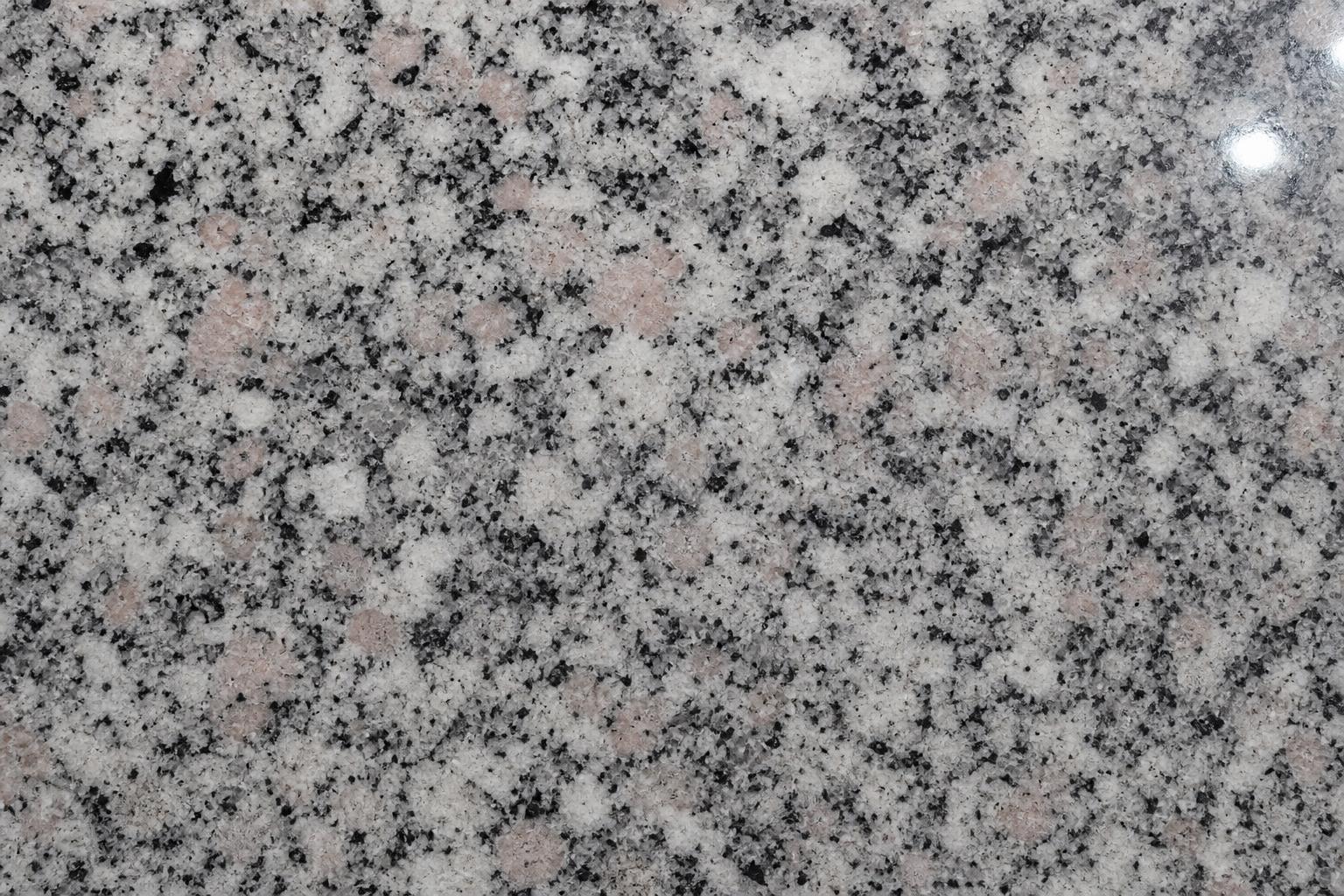
Granite
Hard, heat-tolerant, and nearly bulletproof.
Granite is an igneous stone made of interlocking quartz, feldspar, and mica crystals. It is one of the hardest natural stones used in interiors and tolerates heat, scratches, and daily abuse with minimal fuss.
Telltale traits
- speckled crystalline pattern
- high gloss
- varied mineral colors
Best for
- • High-use kitchen counters
- • Outdoor kitchens
- • Bar tops
- • Bathroom vanities
Avoid for
- • Designs needing perfectly uniform pattern
Cleaning routine
Daily
Warm water with a few drops of mild dish soap or a pH-neutral stone cleaner.
Weekly
Use a granite-safe cleaner and buff dry with a microfiber cloth.
Deep clean
Use a poultice for set-in oil stains; reseal afterward.
Sealing
Yes — Every 1–3 years
Test with a water drop — if it darkens within minutes, reseal.
What to avoid
When to call a pro
Contact a pro for chips, deep cracks, or full re-polishing.
Safe products & ingredients
Stone family: Silica-based (acid-tolerant)
Use these products
- • pH-neutral stone cleaner (Granite Gold, MB-5, StoneTech Revitalizer)
- • Mild dish soap (a few drops in warm water) for occasional cleaning
- • Penetrating impregnator sealer every 1–3 years
- • Isopropyl alcohol (50/50 with water) for disinfecting counters
Look for these ingredients
- • Neutral pH surfactants
- • Isopropyl alcohol up to 50%
- • Hydrogen peroxide 3% (spot use for organic stains)
- • Fluoropolymer or silane/siloxane sealer chemistry
Never use on this stone
Avoid these products
- • Bleach and ammonia-based sprays used daily
- • Acidic bathroom cleaners (CLR, Lime-A-Way) on polished finishes
- • Wax or topical 'shine' sprays — they trap haze
- • Vinegar — it won't etch quartzite/granite quickly but degrades sealers
Scan labels for these ingredients
- Sodium hypochlorite (bleach) in repeated daily use
- Ammonium hydroxide (ammonia) in repeated daily use
- Hydrofluoric acid (in some rust removers) — destroys quartz
- Silicone polish additives — leave a residue under sealer
Do's and don'ts at a glance
Do
- Wipe daily with neutral cleaner or soap-and-water
- Disinfect occasionally with diluted isopropyl alcohol
- Test sealer yearly with a water bead
- Use a cutting board to protect knives, not the stone
Don't
- Don't rely on bleach or ammonia for daily cleaning — they strip sealer
- Don't put a hot pan on a sealed area repeatedly — heat shortens sealer life
- Don't use rust removers without checking they're hydrofluoric-acid free
- Don't ignore a faded water bead — that's the cue to reseal
Frequently asked questions
How often should I seal granite?
Every 1–3 years for most slabs. Test with water — if it darkens within minutes, reseal.
Can I cut directly on granite?
Granite won't scratch easily, but you'll dull your knives. Use a cutting board.
Is granite radioactive?
Trace radon is present in some granites at levels well below health concern. It's not a practical worry for finished countertops.